|
SuperTinyKernel™ RTOS 1.08.x
Lightweight, high-performance, deterministic, bare-metal C++ RTOS for resource-constrained embedded systems. MIT Open Source License.
|
|
SuperTinyKernel™ RTOS 1.08.x
Lightweight, high-performance, deterministic, bare-metal C++ RTOS for resource-constrained embedded systems. MIT Open Source License.
|
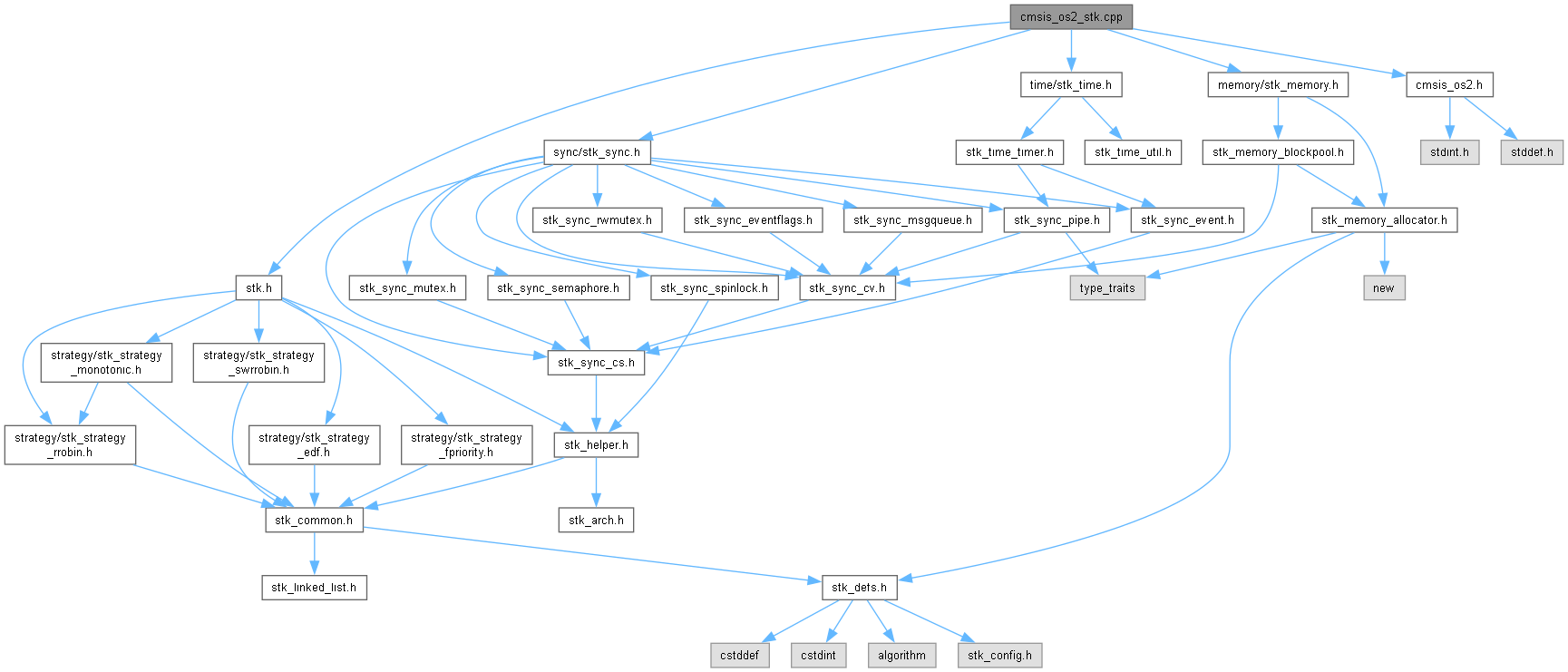
#include "stk.h"#include "sync/stk_sync.h"#include "time/stk_time.h"#include "memory/stk_memory.h"#include "cmsis_os2.h"Go to the source code of this file.
Classes | |
| class | StkThread |
| struct | StkMutex |
| struct | StkSemaphore |
| struct | StkEventFlags |
| class | StkTimer |
| class | StkMemPool |
| class | StkMessageQueue |
Macros | |
| #define | STK_WRAPPER_API_VERSION 20030000UL |
| #define | STK_WRAPPER_KERNEL_VERSION 20030000UL |
| #define | STK_WRAPPER_KERNEL_ID "STK RTOS2 Wrapper v1.0" |
| #define | CMSIS_STK_MAX_THREADS (16U) |
| #define | CMSIS_STK_DEFAULT_STACK_WORDS (256U) |
| #define | CMSIS_STK_MIN_STACK_WORDS (STK_STACK_SIZE_MIN) |
Typedefs | |
| using | StkKernel |
Variables | |
| static StkKernel | g_StkKernel |
| static uint32_t | g_StkKernelLocked = 0U |
| static stk::time::TimerHost * | g_TimerHost = nullptr |
| static stk::Word | g_TimerHostBuf [StkGetWordCountForType< stk::time::TimerHost >()] |
| #define CMSIS_STK_DEFAULT_STACK_WORDS (256U) |
Definition at line 39 of file cmsis_os2_stk.cpp.
Referenced by osThreadNew().
| #define CMSIS_STK_MAX_THREADS (16U) |
Definition at line 34 of file cmsis_os2_stk.cpp.
| #define CMSIS_STK_MIN_STACK_WORDS (STK_STACK_SIZE_MIN) |
Definition at line 43 of file cmsis_os2_stk.cpp.
Referenced by osThreadNew().
| #define STK_WRAPPER_API_VERSION 20030000UL |
Definition at line 23 of file cmsis_os2_stk.cpp.
Referenced by osKernelGetInfo().
| #define STK_WRAPPER_KERNEL_ID "STK RTOS2 Wrapper v1.0" |
Definition at line 25 of file cmsis_os2_stk.cpp.
Referenced by osKernelGetInfo().
| #define STK_WRAPPER_KERNEL_VERSION 20030000UL |
Definition at line 24 of file cmsis_os2_stk.cpp.
Referenced by osKernelGetInfo().
| using StkKernel |
Definition at line 152 of file cmsis_os2_stk.cpp.
|
static |
Definition at line 492 of file cmsis_os2_stk.cpp.
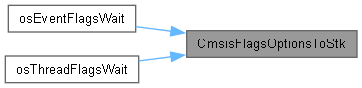
References __stk_forceinline, stk::sync::EventFlags::OPT_NO_CLEAR, stk::sync::EventFlags::OPT_WAIT_ALL, stk::sync::EventFlags::OPT_WAIT_ANY, osFlagsNoClear, and osFlagsWaitAll.
Referenced by osEventFlagsWait(), and osThreadFlagsWait().
|
static |
Definition at line 77 of file cmsis_os2_stk.cpp.
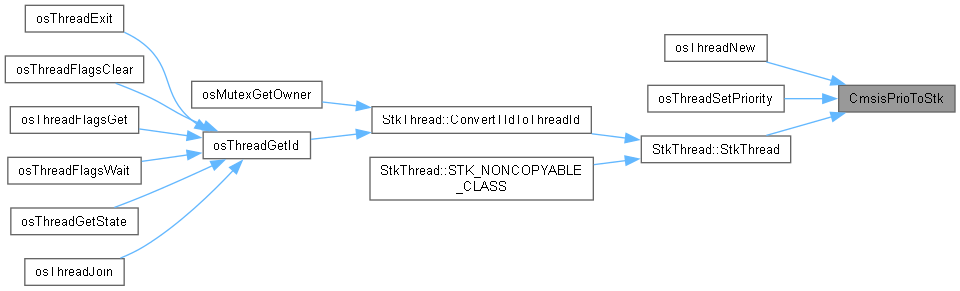
References __stk_forceinline, osPriorityIdle, and osPriorityISR.
Referenced by osThreadNew(), osThreadSetPriority(), and StkThread::StkThread().
|
static |
Definition at line 52 of file cmsis_os2_stk.cpp.
Referenced by osKernelGetInfo().
|
static |
Definition at line 120 of file cmsis_os2_stk.cpp.
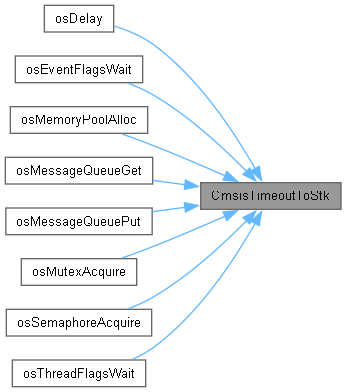
References __stk_forceinline, stk::NO_WAIT, and stk::WAIT_INFINITE.
Referenced by osDelay(), osEventFlagsWait(), osMemoryPoolAlloc(), osMessageQueueGet(), osMessageQueuePut(), osMutexAcquire(), osSemaphoreAcquire(), and osThreadFlagsWait().
| void free | ( | void * | ptr | ) |
|
static |
Definition at line 144 of file cmsis_os2_stk.cpp.
References __stk_forceinline, and stk::hw::IsInsideISR().
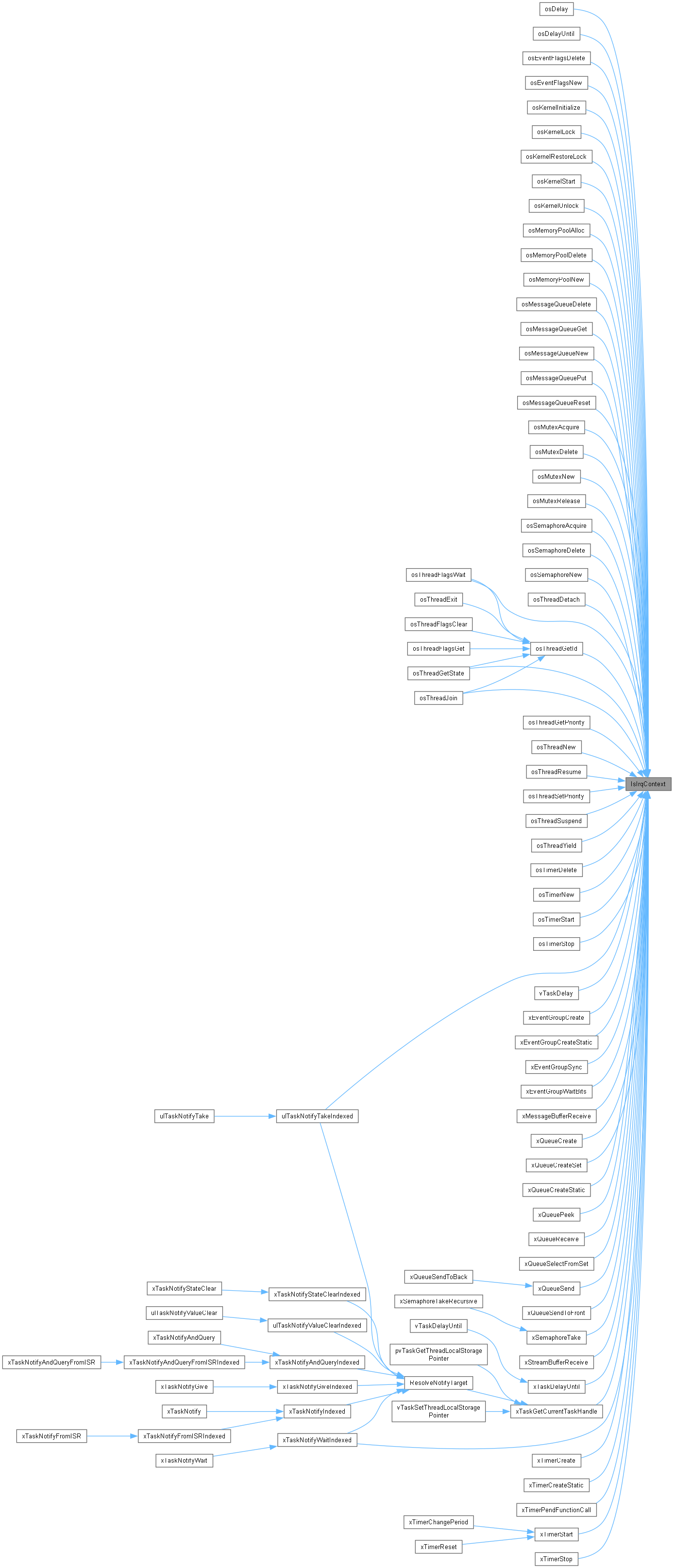
Referenced by osDelay(), osDelayUntil(), osEventFlagsDelete(), osEventFlagsNew(), osKernelInitialize(), osKernelLock(), osKernelRestoreLock(), osKernelStart(), osKernelUnlock(), osMemoryPoolAlloc(), osMemoryPoolDelete(), osMemoryPoolNew(), osMessageQueueDelete(), osMessageQueueGet(), osMessageQueueNew(), osMessageQueuePut(), osMessageQueueReset(), osMutexAcquire(), osMutexDelete(), osMutexNew(), osMutexRelease(), osSemaphoreAcquire(), osSemaphoreDelete(), osSemaphoreNew(), osThreadDetach(), osThreadFlagsWait(), osThreadGetId(), osThreadGetPriority(), osThreadGetState(), osThreadJoin(), osThreadNew(), osThreadResume(), osThreadSetPriority(), osThreadSuspend(), osThreadYield(), osTimerDelete(), osTimerNew(), osTimerStart(), osTimerStop(), ulTaskNotifyTakeIndexed(), vTaskDelay(), xEventGroupCreate(), xEventGroupCreateStatic(), xEventGroupSync(), xEventGroupWaitBits(), xMessageBufferReceive(), xQueueCreate(), xQueueCreateSet(), xQueueCreateStatic(), xQueuePeek(), xQueueReceive(), xQueueSelectFromSet(), xQueueSend(), xQueueSendToFront(), xSemaphoreTake(), xStreamBufferReceive(), xTaskDelayUntil(), xTaskGetCurrentTaskHandle(), xTaskNotifyWaitIndexed(), xTimerCreate(), xTimerCreateStatic(), xTimerPendFunctionCall(), xTimerStart(), and xTimerStop().
| void * malloc | ( | size_t | size | ) |
|
static |
Definition at line 479 of file cmsis_os2_stk.cpp.
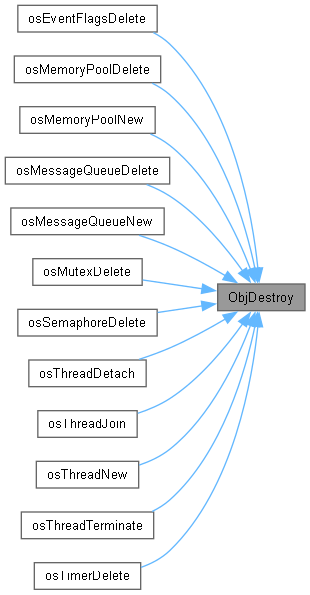
Referenced by osEventFlagsDelete(), osMemoryPoolDelete(), osMemoryPoolNew(), osMessageQueueDelete(), osMessageQueueNew(), osMutexDelete(), osSemaphoreDelete(), osThreadDetach(), osThreadJoin(), osThreadNew(), osThreadTerminate(), and osTimerDelete().
|
static |
Definition at line 456 of file cmsis_os2_stk.cpp.
References STK_ASSERT.
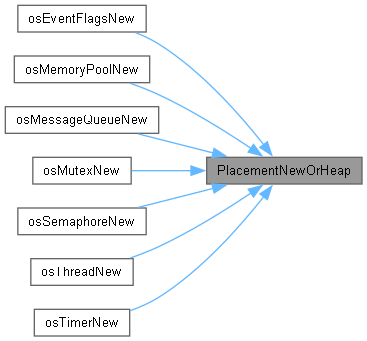
Referenced by osEventFlagsNew(), osMemoryPoolNew(), osMessageQueueNew(), osMutexNew(), osSemaphoreNew(), osThreadNew(), and osTimerNew().
|
static |
Definition at line 510 of file cmsis_os2_stk.cpp.
References __stk_forceinline, stk::sync::EventFlags::ERROR_ISR, stk::sync::EventFlags::ERROR_PARAMETER, stk::sync::EventFlags::ERROR_TIMEOUT, stk::sync::EventFlags::IsError(), osFlagsErrorISR, osFlagsErrorParameter, osFlagsErrorTimeout, and osFlagsErrorUnknown.
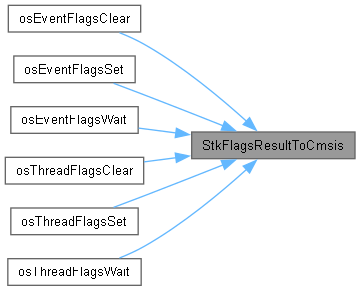
Referenced by osEventFlagsClear(), osEventFlagsSet(), osEventFlagsWait(), osThreadFlagsClear(), osThreadFlagsSet(), and osThreadFlagsWait().
|
staticconstexpr |
Definition at line 46 of file cmsis_os2_stk.cpp.
|
static |
Definition at line 96 of file cmsis_os2_stk.cpp.
References __stk_forceinline, osPriorityIdle, and osPriorityISR.
Referenced by osThreadGetPriority().
|
static |
Definition at line 158 of file cmsis_os2_stk.cpp.
Referenced by EnsureKernelInitialized(), StkTimer::EnsureTimerHostCreated(), osKernelGetState(), osKernelInitialize(), osKernelStart(), osThreadEnumerate(), osThreadExit(), osThreadGetCount(), osThreadNew(), osThreadResume(), osThreadSuspend(), osThreadTerminate(), uxTaskGetNumberOfTasks(), uxTaskGetSystemState(), vTaskDelete(), vTaskEndScheduler(), vTaskGetRunTimeStats(), vTaskList(), vTaskResume(), vTaskStartScheduler(), vTaskSuspend(), xTaskCreate(), xTaskCreateStatic(), xTaskGetHandle(), xTaskGetSchedulerState(), and xTaskResumeFromISR().
|
static |
Definition at line 159 of file cmsis_os2_stk.cpp.
Referenced by osKernelGetState(), osKernelLock(), osKernelRestoreLock(), and osKernelUnlock().
|
static |
Definition at line 312 of file cmsis_os2_stk.cpp.
Referenced by EnsurePendDrainer(), StkTimer::EnsureTimerHostCreated(), KickPendDrainerFromISR(), osTimerDelete(), osTimerStart(), osTimerStop(), xTimerChangePeriodFromISR(), xTimerDelete(), xTimerGetExpiryTime(), xTimerPendFunctionCallFromISR(), xTimerStart(), xTimerStartFromISR(), xTimerStop(), and xTimerStopFromISR().
|
static |
Definition at line 313 of file cmsis_os2_stk.cpp.
Referenced by StkTimer::EnsureTimerHostCreated().
 1.16.1